
Leadership & Ideology
- Home
- Leadership & Ideology
Traditional Authority
Tribal Governance & Justice System
Before the intrusion of colonial administration, Santhal society functioned through a deeply rooted system of self-governance that emphasized collective responsibility, moral accountability, and harmony with nature. Leadership was not imposed through external authority but emerged from community trust, wisdom, and demonstrated integrity. Tribal governance was decentralized yet highly structured, with village councils serving as the primary decision-making bodies. Elders and respected leaders played a central role in guiding discussions, resolving disputes, and maintaining social balance. This system ensured that governance remained close to the people and responsive to their needs.
The justice system within the Santhal community was grounded in restorative principles rather than punitive measures. When conflicts arose—whether related to land, family matters, or social disagreements—they were addressed through open dialogue within the village assembly. The objective was not simply to determine guilt but to restore harmony between individuals and the wider community. Decisions were made collectively, often after listening to all parties involved. This transparent and participatory approach strengthened social bonds and minimized long-term divisions.
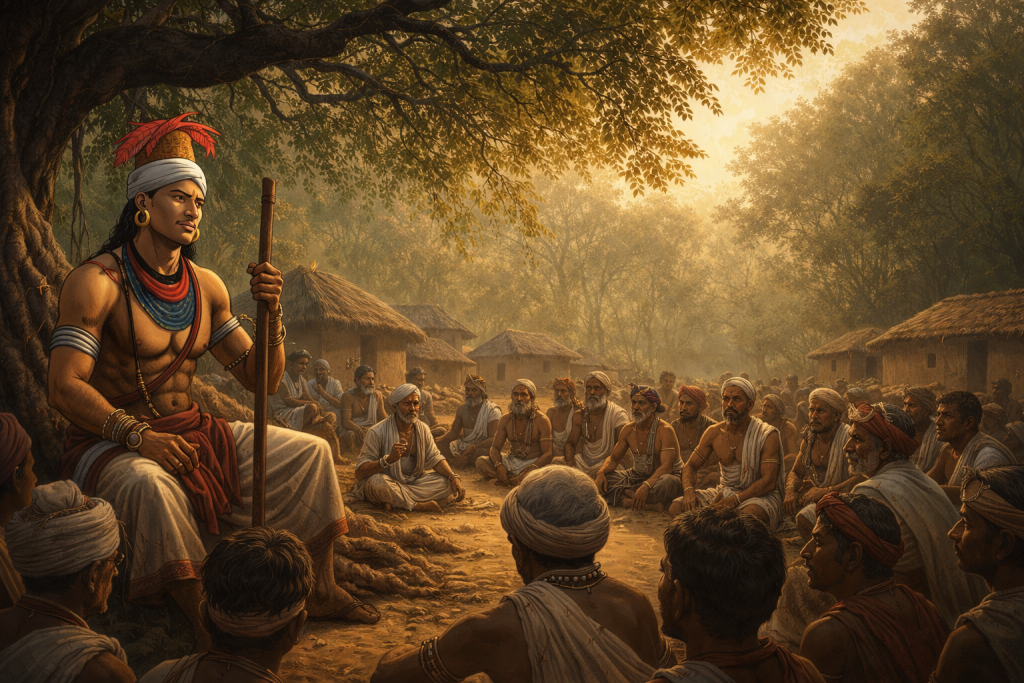
Customary laws were passed down orally across generations. These traditions governed marriage practices, land use, agricultural responsibilities, and community rituals. Because land was considered sacred and collectively sustained, disputes related to territory were handled with careful consideration. Forests, rivers, and fields were not merely economic resources but spiritual and cultural lifelines. The governance system protected these shared assets, ensuring that no individual could exploit them at the expense of the community. Responsibility toward nature was intertwined with responsibility toward society.
Leadership within this framework required more than authority—it required moral strength. A tribal leader was expected to embody courage, fairness, and self-discipline. Decisions carried weight because they reflected not just personal opinion but the collective will.Gundadhur’s leadership emerged from this very tradition. His authority was rooted in cultural legitimacy, shaped by a system that valued justice, dignity, and communal welfare above personal gain. This foundation enabled him to mobilize people effectively when external threats challenged their autonomy.
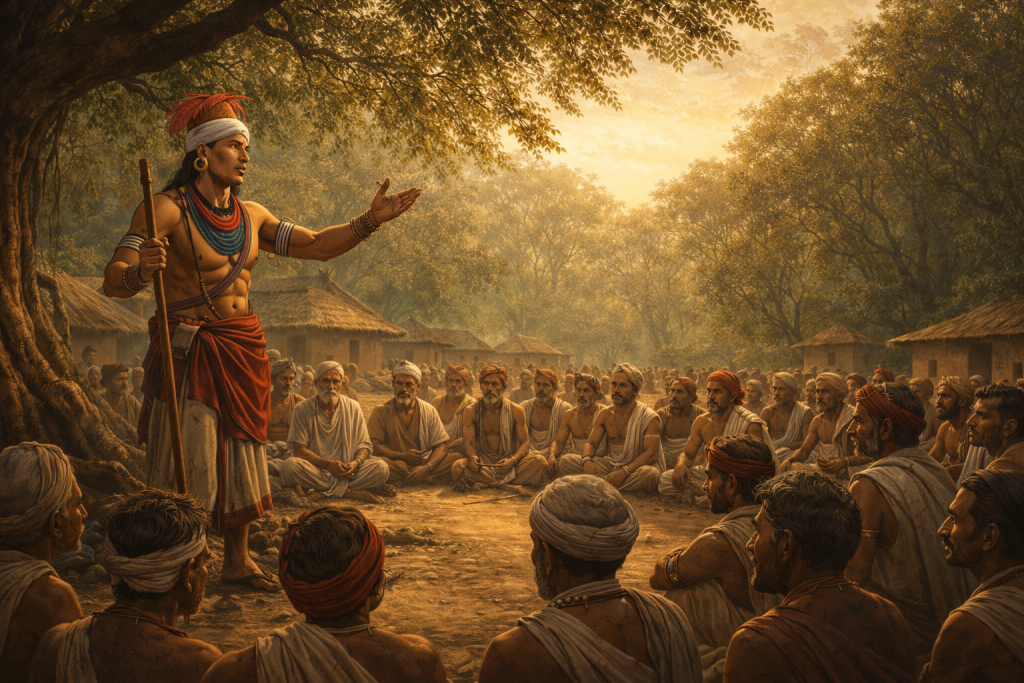
Before the intrusion of colonial administration, Santhal society functioned through a deeply rooted system of self-governance that emphasized collective responsibility, moral accountability, and harmony with nature. Leadership was not imposed through external authority but emerged from community trust, wisdom, and demonstrated integrity. Tribal governance was decentralized yet highly structured, with village councils serving as the primary decision-making bodies. Elders and respected leaders played a central role in guiding discussions, resolving disputes, and maintaining social balance. This system ensured that governance remained close to the people and responsive to their needs.
The justice system within the Santhal community was grounded in restorative principles rather than punitive measures. When conflicts arose—whether related to land, family matters, or social disagreements—they were addressed through open dialogue within the village assembly. The objective was not simply to determine guilt but to restore harmony between individuals and the wider community. Decisions were made collectively, often after listening to all parties involved. This transparent and participatory approach strengthened social bonds and minimized long-term divisions.
Dignity Above
Domination
Unity as
Strength
Land and
Identity
Courage in
Adversity
Preservation of Traditions
Gundadhur strongly believed that the survival of his people depended upon the preservation of their customs, rituals, and collective memory. Santhal traditions were not merely cultural expressions; they defined social order, spiritual belief, and community relationships. Seasonal festivals, ancestral worship, oral storytelling, and village gatherings strengthened unity and identity. As external forces attempted to impose unfamiliar systems and values, he encouraged his people to remain rooted in their heritage. Protecting traditions meant safeguarding dignity, language, and collective pride. Through cultural continuity, the community maintained resilience, ensuring that future generations would inherit a strong and unbroken identity.
Defense of Tribal Autonomy
Beyond rituals and customs, Gundadhur understood that identity was closely tied to autonomy. The Santhal community’s governance, land stewardship, and social structure were deeply interconnected with cultural values. When external authorities sought to control land and weaken local leadership, it threatened not only economic stability but also cultural self-determination. He advocated for the protection of traditional decision-making systems and communal rights over forests and fields. By defending autonomy, he ensured that the Santhal way of life could continue without external domination. This resistance preserved both physical territory and the deeper spiritual and cultural foundations of his people.
Relationship with Santhal Community
Trusted Community Leader
Gundadhur leadership was built on deep trust and mutual respect within the Santhal community. He did not stand above his people but among them, listening to their concerns and sharing in their struggles. His decisions reflected collective wisdom rather than personal ambition. By participating in village gatherings, rituals, and community discussions, he maintained a strong connection with everyday life.
Guardian of Collective Identity
Beyond political resistance, Rando Manjhi served as a moral guide and cultural guardian for the Santhal community. He reinforced shared values of courage, cooperation, and respect for tradition. During times of uncertainty and external pressure, his presence provided reassurance and direction. He encouraged solidarity among villages and fostered a spirit of collective responsibility.